Chronic Care vs. Specialist vs. Urgent Care: How to Choose
2026-09-28 · 8 min read
In this article
Choosing between ongoing chronic condition management with a primary care provider, seeing a specialist directly, and relying on urgent care for flare-ups depends on what your condition needs: continuity, specialized expertise, or quick access. Ongoing management with a primary care provider gives you a clinician who tracks your labs over time and adjusts your plan proactively; a specialist offers deep expertise for complex cases; urgent care handles acute episodes but rarely offers the ongoing relationship that chronic conditions require. NBH Health in Pembroke Pines offers chronic condition management for adults 18 and older, in-office, at home, and by telemedicine across Broward and Miami-Dade.
There is no single right answer for every condition. The best approach depends on how complex your condition is, whether you value seeing the same clinician, and how much coordination you need across different aspects of your health.
How the three approaches differ
Each approach answers a different question. Understanding the trade-offs helps you choose the right one for your situation.
| Need | Primary care management | Specialist care | Urgent care for flare-ups |
|---|---|---|---|
| Continuity | Same provider, ongoing | Specialist-focused | Rarely ongoing |
| Scope | Whole-person, coordinated | Single system, deep | Acute episode only |
| Lab tracking | Over time, trend-based | Condition-specific | One-time snapshot |
| Best for | Stable chronic conditions | Complex or advanced cases | Acute episodes between visits |
Primary care management is built around the long view. Your provider watches how your condition changes over months and years, not just how it looks today. Specialist care is built around depth — a cardiologist knows the heart in detail, an endocrinologist knows hormones in detail. Urgent care is built around access — fast, walk-in, but rarely the same clinician twice and no ongoing relationship.
When primary care management makes sense
Chronic condition management with a primary care provider tends to be the right fit when your condition is stable or moderately controlled and you want one clinician holding the whole picture. Common situations include:
- Your diabetes, hypertension, or cholesterol is managed with medication and lifestyle and needs regular monitoring.
- You want your chronic condition care coordinated with weight loss, wellness, or other primary care needs.
- You prefer a provider you can message between visits rather than waiting for a specialist appointment.
- You need someone to coordinate your specialists rather than navigating them alone.
It is not a replacement for specialist care when your condition requires it. If your diabetes is complex, your heart disease is advanced, or your thyroid is difficult to control, a specialist may need to be part of your team. Your primary care provider coordinates that referral and stays in communication with the specialist.
When a specialist makes sense
A specialist is the right choice when your condition is complex, advanced, or requires procedures or expertise beyond primary care scope. An endocrinologist for a difficult thyroid case, a cardiologist for advanced heart disease, a pulmonologist for severe COPD — these are situations where specialized depth matters.
What a specialist does not always provide is whole-person coordination. If you see three specialists for three different conditions, someone needs to hold the picture together — to notice that a medication one specialist prescribed interacts with one another prescribed, or that a lab trend across conditions tells a story no single specialist sees. That is the role primary care management plays even when specialists are involved.
When urgent care makes sense for chronic patients
Urgent care has a limited but real role for chronic condition patients: handling an acute episode that cannot wait for a regular appointment but is not an emergency. A sudden spike in blood pressure, a respiratory infection that complicates your asthma, a minor issue that flares between visits.
The trade-off is that urgent care rarely knows your history, cannot adjust your chronic medications meaningfully in a single visit, and does not follow up. If you have a primary care provider managing your condition, many of those same acute concerns can be handled by your own clinician — often by telemedicine — with the advantage that she already knows your baseline.
What affects your management plan
Your management plan is shaped by several factors:
- Which condition or conditions you have, and how stable each one is.
- Your lab trends over time — not just the latest result, but the direction.
- Your medications, including doses, interactions, and how well they are working.
- Your lifestyle and habits, which directly affect most chronic conditions.
- Whether you have related conditions that need to be managed together.
Two adults with the same diagnosis may need very different plans. That is why chronic condition management at NBH Health never starts with a protocol — it starts with you, your history, and a conversation.
How continuity lowers your long-term risk
The structure of ongoing management lowers your risk in ways that episodic care cannot. A provider who tracks your labs over months can spot a trend — a slowly rising A1C, a blood pressure that is creeping up, a thyroid level that has shifted — before it becomes a problem you feel. Early adjustment is almost always simpler, safer, and less expensive than waiting for a crisis.
Continuity also means your time is respected. Instead of explaining your history to a new clinician every visit, you see a provider who already has your file. For busy adults managing a chronic condition, that efficiency is part of the value.
Questions to ask before choosing a management approach
Whether you choose primary care management, specialist care, or a combination, a few questions help you decide:
- Will I see the same clinician each time, or whoever is available?
- How are labs tracked — as one-time results or as trends over time?
- Can I reach my provider between visits for questions?
- Who coordinates my care if I see multiple specialists?
- Is the practice clear about what it manages and what it refers out?
A provider who answers these directly is usually a better long-term fit than one who cannot.
If you are living with a chronic condition and want a provider who monitors it with you over time, NBH Health offers chronic condition management in Pembroke Pines, with at-home visits across Broward and Miami-Dade and telemedicine for Florida residents. Request a consultation online or call / WhatsApp (786) 443-4767. Beyond the Health.
Frequently Asked Questions
Should I see a specialist or a primary care provider for my chronic condition?
It depends on complexity. Stable, moderately controlled conditions like routine diabetes, hypertension, or high cholesterol are often well-managed by a primary care provider. Complex, advanced, or hard-to-control cases may need a specialist. Your provider evaluates and refers when appropriate, while still coordinating your overall care.
Can I use urgent care for my chronic condition?
Urgent care can handle an acute episode that cannot wait for a regular appointment but is not an emergency. It is not a substitute for ongoing management, because it rarely knows your history or follows up. If you have a primary care provider, many acute concerns can be handled by your own clinician.
Will I see the same provider every visit?
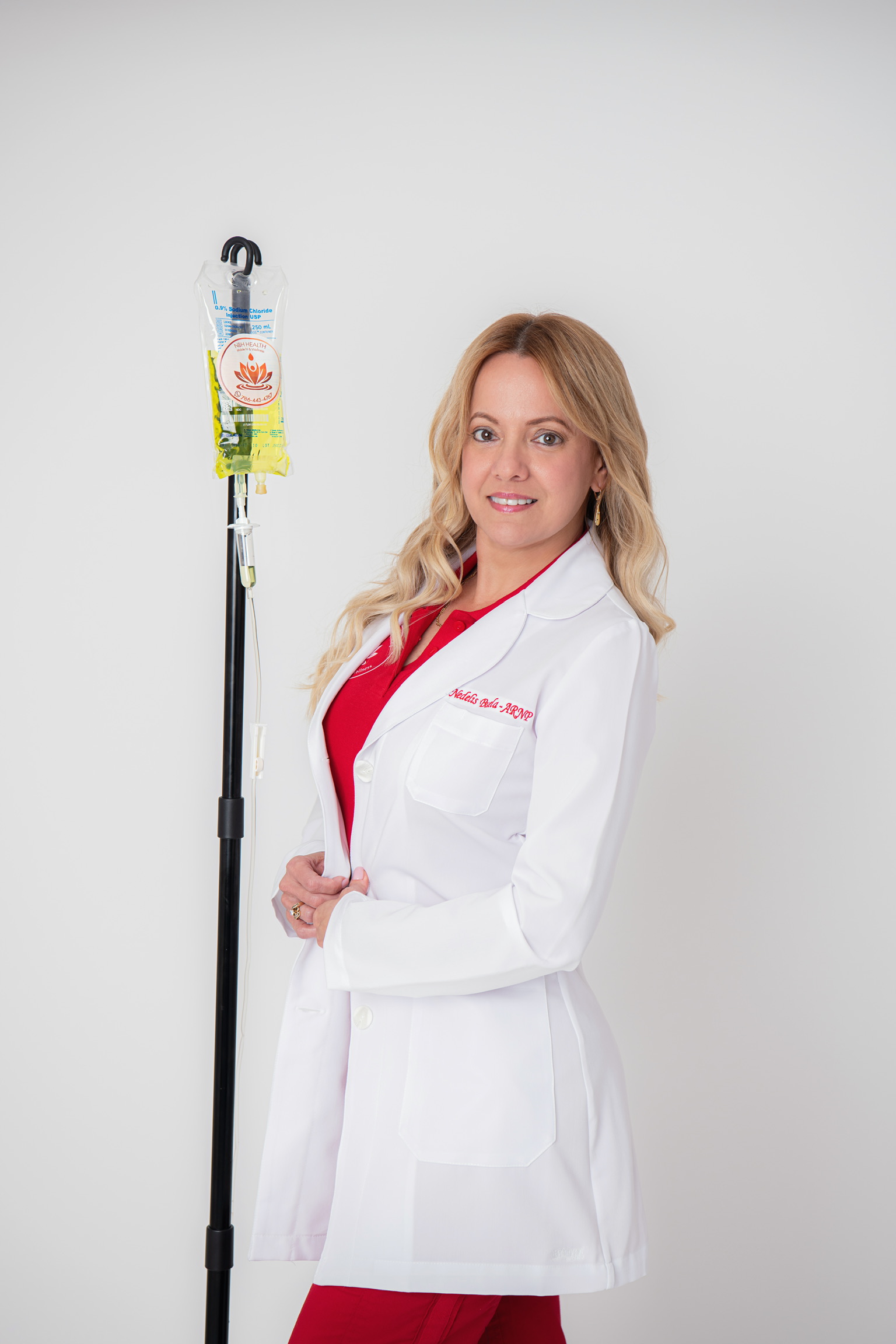
Yes. At NBH Health you see Nedelis Buela, APRN, AGNP, each visit. That continuity is one of the main reasons patients choose ongoing management over rotating clinic staff or urgent care.
How are my labs tracked?
Your provider reviews your labs as trends over time, not just one-time results. A slowly shifting value gets attention before it becomes a problem, which is the core advantage of ongoing management over episodic care.
What if I need to see multiple specialists?
Your primary care provider coordinates your specialists, stays in communication with them, and watches for interactions between medications or trends across conditions that no single specialist may see.
Does NBH Health accept insurance for chronic condition management?
No. The practice is self-pay / direct access. It does not bill insurance. You receive a personalized quote before care, and you can keep your insurance for specialist visits, imaging, hospitalizations, and emergencies.
NBH Health
Pembroke Pines · Broward & Miami-Dade · Telemedicine

Nedelis
Nedelis Buela, APRN, AGNP
Adult-Gerontology Nurse Practitioner · NBH Health