Self-Pay vs. Insurance vs. Urgent Care: How to Choose
2026-09-19 · 8 min read
In this article
- 1. How the three models differ
- 2. When self-pay makes sense
- 3. When urgent care makes sense
- 4. What affects the cost of a self-pay visit
- 5. Questions to ask before choosing a provider
- 6. How your history affects the recommendation
- 7. What about prescriptions and refills?
- 8. How to get started with self-pay primary care
- 9. What to do if you have insurance but still want self-pay
- 10. How continuity lowers your long-term costs
- 11. A note on privacy and your records
- 12. Combining self-pay with other NBH Health services
Choosing between self-pay primary care, an insurance-based clinic, and urgent care comes down to what you need: continuity, cost predictability, or speed. Self-pay primary care gives you a regular provider who knows your history and quotes your cost upfront; insurance-based care may spread costs across a plan but adds deductibles and referrals; urgent care is fast for one-off issues but rarely offers ongoing relationships. NBH Health in Pembroke Pines offers self-pay primary care for adults 18 and older, in-office, at home, and by telemedicine across Broward and Miami-Dade.
There is no single "best" option for every situation. The right choice depends on whether your concern is ongoing or one-time, whether you value seeing the same clinician, and how much predictability you want around cost.
How the three models differ
Each model answers a different question. Understanding the trade-offs helps you pick the right one for the moment.
| Concern | Self-pay primary care | Insurance-based clinic | Urgent care |
|---|---|---|---|
| Continuity | Same provider every visit | May vary by availability | Rarely |
| Cost predictability | Quoted before care | Depends on plan/deductible | Per-visit bill |
| Referrals needed | No | Often yes | No |
| Best for | Ongoing + acute care | Covered services | One-time minor issues |
Self-pay primary care is built around a relationship. You see the same nurse practitioner, who knows your history, your medications, and your goals. Urgent care is built around access — fast, walk-in, but rarely the same clinician twice. Insurance-based clinics fall somewhere in between, but the cost depends heavily on your plan.
When self-pay makes sense
Self-pay primary care tends to be the better fit when you want continuity and cost clarity. Common situations include:
- You are uninsured or between plans and want a regular provider.
- You have a high-deductible plan and would rather pay directly than meet the deductible for routine care.
- You want to message your provider between visits without going through a portal.
- You want labs, follow-ups, and telemedicine coordinated by one clinician who knows you.
It is not a replacement for insurance. Emergencies, hospitalizations, surgeries, and specialist services outside the practice's scope still require insurance or other coverage. Self-pay is for the everyday primary care that keeps you out of the emergency room in the first place.
When urgent care makes sense
Urgent care is designed for a single, minor, acute issue that cannot wait for a regular appointment but is not an emergency — a sinus infection, a minor rash, a UTI. It is fast and convenient. The trade-off is that you usually see whoever is on shift, there is little continuity, and follow-up is limited.
If you already have a self-pay primary care provider, many of those same acute concerns can be handled by your own clinician — often by telemedicine — with the advantage that she already knows your history. For a true emergency, urgent care is not the answer either; call 911 or go to the nearest ER.
What affects the cost of a self-pay visit
The practice is clear: no published prices, because every patient's needs differ. What you can know in advance is what drives the quote:
- The type of visit — a quick acute visit costs less than a comprehensive chronic-condition workup.
- Whether labs are ordered, and which panels.
- Whether a procedure or in-depth exam is involved.
- Whether the visit is in-office, at home, or by telemedicine.
You receive a personalized quote based on your evaluation, before anything beyond the booked visit is done. That is the core difference from insurance-based care, where the final bill often arrives weeks later and depends on what the plan allows.
Questions to ask before choosing a provider
Whether you choose self-pay, insurance-based, or urgent care, a few questions help you decide if a provider is right for you:
- Will I see the same clinician each time, or whoever is available?
- How are costs communicated — before or after the visit?
- Can I reach my provider between visits for follow-up questions?
- Are telemedicine and at-home options available?
- Is the practice clear about what it does and does not treat?
A provider who answers these directly is usually a better long-term fit than one who cannot.
How your history affects the recommendation
Your age, health history, medications, and goals all shape what your provider recommends. Two adults with the same fatigue may take different paths — one toward labs, one toward lifestyle changes. That is why a good first visit is a conversation, not a protocol. Self-pay care at NBH Health is built around that conversation, with a clinician who has time for it.
What about prescriptions and refills?
A common question is how prescriptions work without insurance. In a self-pay model, your nurse practitioner can prescribe and refill appropriate medications just as she would in any primary care setting — the difference is simply who pays for the visit, not what the provider can do. Prescriptions are sent electronically to the pharmacy of your choice in Florida, and you pay the pharmacy directly for the medication, often using a discount card or your insurance's pharmacy benefit if you have one.
What does not change is the clinical judgment. Your provider evaluates whether a medication is appropriate, reviews for interactions with anything else you take, and follows up to make sure it is working. Refills are managed as part of your ongoing care, not handed out without a check-in when one is due.
How to get started with self-pay primary care
Starting is straightforward. You do not need a referral, an insurance card, or a primary care panel assignment. You reach out by phone or WhatsApp, describe what you need, and schedule a visit — in-office in Pembroke Pines, at home across Broward and Miami-Dade, or by telemedicine if you are a Florida resident and your concern can be handled by video.
At your first visit, your provider gets to know you, reviews your history, and builds a plan. You receive a personalized quote for anything beyond the booked visit before it happens. From there, ongoing care — follow-ups, labs, refills, telemedicine check-ins — is coordinated by one clinician who knows you, not a rotating cast.
What to do if you have insurance but still want self-pay
Many patients at NBH Health have insurance and still choose self-pay for primary care. The reasons vary: a high deductible that makes routine visits expensive until it is met, a plan that requires referrals and delays care, a desire for a specific provider who is not in-network, or simply a preference for direct access and transparent pricing.
Using self-pay does not cancel or affect your insurance. You can use your insurance for pharmacy benefits, specialist visits, imaging, hospitalizations, and emergencies, while paying directly for the primary care services offered here. Some patients submit their own claims to insurance for reimbursement, though NBH Health does not bill insurance on your behalf. The key is that the choice is yours at each step.
How continuity lowers your long-term costs
While the practice does not publish prices, the structure of self-pay primary care can lower what you spend over time in less obvious ways. Seeing the same provider who knows your history means fewer unnecessary repeat tests, fewer duplicate visits to explain your background, and earlier intervention when a small concern is caught before it becomes a bigger one. A provider who tracks your labs over months can spot a trend that a one-off urgent care visit would miss.
Continuity also means your time is respected. Instead of waiting weeks for an appointment with an unfamiliar clinic, you reach a provider who already has your file. For busy adults in South Florida, that efficiency is part of the value — and it is something urgent care and insurance-based rotating clinics rarely offer.
A note on privacy and your records
Self-pay care offers a privacy advantage some patients appreciate: because no insurance claim is filed, fewer parties see your visit details. Your records stay between you and your provider. NBH Health follows HIPAA-conscious practices, conducts visits in private settings, and uses secure platforms for telemedicine. Your information is not shared without your authorization, and you can request your records at any time.
Combining self-pay with other NBH Health services
One reason the comparison between self-pay, insurance, and urgent care matters is that your needs rarely fall into just one category. A patient managing hypertension may also want a medical weight-loss plan; someone coming in for a sick visit may benefit from a lab panel; a wellness patient curious about IV therapy may need a primary care check-in first to make sure it is appropriate. A practice that offers primary care, wellness, and aesthetics under one provider can coordinate those needs without sending you to three different offices.
With self-pay, that coordination stays transparent. Your provider recommends what makes sense for your health, you see the cost of each piece, and you choose what to pursue. There is no pressure to bundle services you do not want, and no confusion about what is covered by what. That clarity is hard to find in either an insurance-based model — where coverage rules dictate options — or urgent care — which is built for one issue at a time.
If you want a provider who takes time to understand your health goals, NBH Health offers self-pay primary care, medical weight loss, and IV therapy in Pembroke Pines, at home across Broward and Miami-Dade, and by telemedicine for Florida residents. Request a consultation online or call / WhatsApp (786) 443-4767. Beyond the Health.
Frequently Asked Questions
Is self-pay cheaper than using my insurance?
It depends on your plan. For routine primary care, self-pay can be simpler and more predictable than meeting a high deductible, but it is not a blanket replacement for insurance. Emergencies, hospitalizations, and services outside the practice still require coverage. NBH Health does not publish prices; you receive a personalized quote before care.
When should I go to urgent care instead?
Urgent care fits a single, minor, acute issue that cannot wait for a regular appointment but is not an emergency. If you have a self-pay primary care provider, many of the same concerns can be handled by your own clinician — often by telemedicine. For emergencies, call 911.
Will I see the same provider every time?
Yes. At NBH Health you see Nedelis Buela, APRN, AGNP, each visit. That continuity is one of the main reasons patients choose self-pay primary care over urgent care or rotating clinic staff.
How is the cost communicated?
You receive a personalized quote before care, based on what you actually need. There are no surprise bills after the fact, and you can decide what to proceed with at each step.
Can telemedicine replace an in-person visit?
For many follow-ups and minor acute concerns, yes. Some issues require an in-person exam or labs. Your provider tells you when a video visit is appropriate and when you should come in.
Does NBH Health accept insurance?
No. The practice is self-pay / direct access. It does not bill insurance or accept plans. If you have insurance, you can still use self-pay for the services offered here and keep your insurance for major needs.
NBH Health
Pembroke Pines · Broward & Miami-Dade · Telemedicine

Nedelis
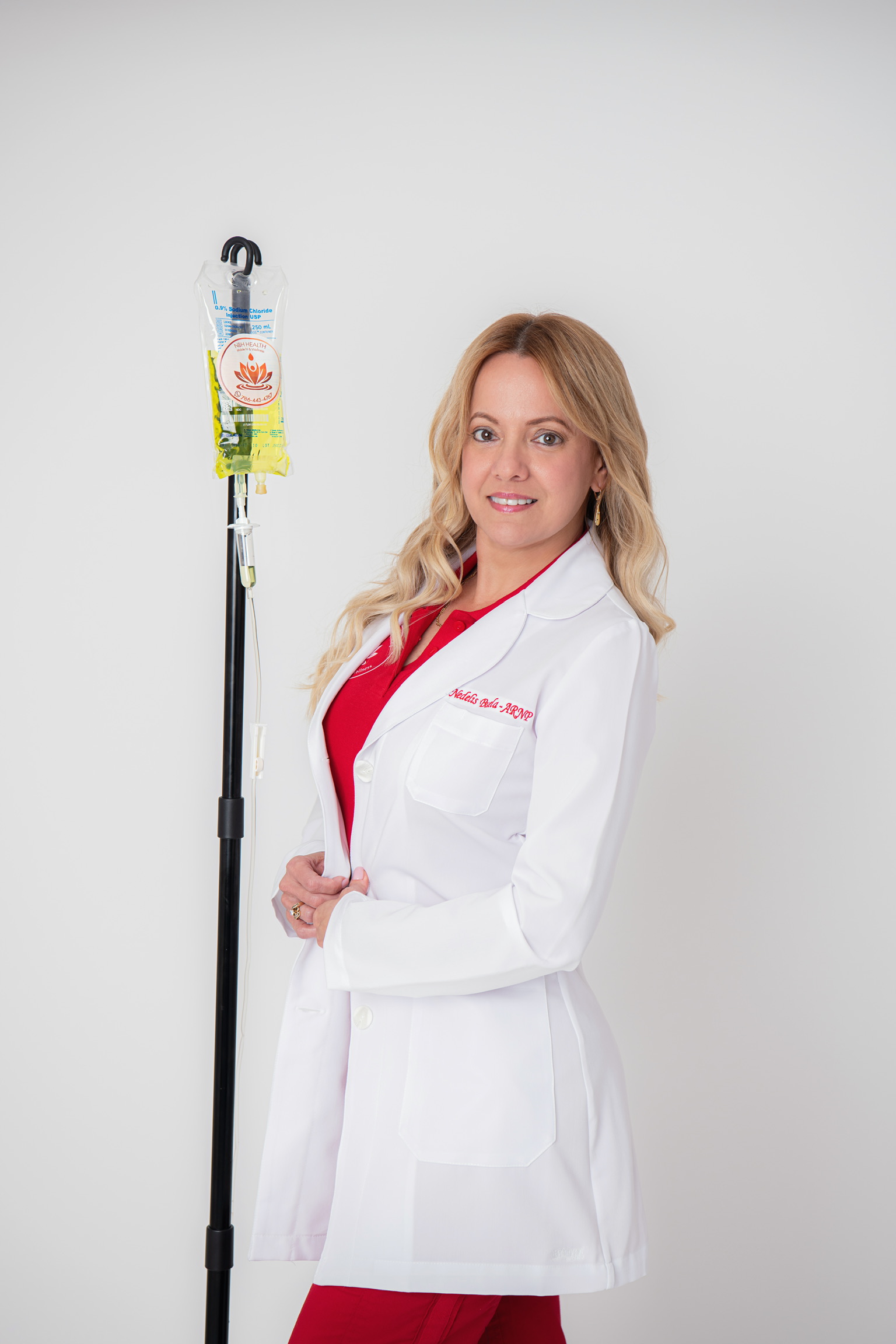
Nedelis Buela, APRN, AGNP
Adult-Gerontology Nurse Practitioner · NBH Health